- Sales tips
- READ 42 MIN
The Modern Sales Playbook: 22 Proven Techniques Top Performers Rely On (Part One)
Sales is evolving fast, and today’s top performers are the ones who communicate clearly, build trust quickly, and stay focused on the actions that move deals forward. At AccountMakers, we work with sales, success, and support professionals across the country, and we consistently see a core set of habits that separate strong reps from everyone else. These skills aren’t complicated, but they take intention, consistency, and a genuine commitment to helping buyers succeed. This guide highlights the practical techniques that modern sellers rely on to create stronger conversations, deepen relationships, and close with confidence.

Focus on Solving Rather Than Selling
Centering conversations on buyer needs and outcomes is one of the most reliable ways to build trust, reduce friction, and guide someone toward saying yes. When a prospect feels understood, they naturally lean in. When they feel pitched, they tighten up.
Top performers flip the script. Instead of diving into features, they approach each interaction like a consultant who diagnoses first, recommends second, and always ties the solution to what the buyer cares about most.
What This Looks Like in Practice:
Buyer: “We’ve been thinking about upgrading our home wellness setup, but we’re not sure if it’s worth the investment.”
Sales Rep: “I appreciate you sharing that. When you say you’re unsure about the investment, what part feels unclear right now?”
Buyer: “We’ve bought smaller items before, but a full equipment package feels like a big step. I want to know it’ll actually improve our daily routine.”
Sales Rep: “That makes total sense. A premium setup should genuinely elevate your health experience. Before we look at options, can I ask what you’re hoping this upgrade will change for you? More convenience? Better results? A consistent routine?”
Buyer: “A consistent routine, definitely. We want something we’ll actually use that feels enjoyable and high quality.”
Sales Rep: “Got it. So if you had equipment that’s comfortable, simple to use, and designed to fit seamlessly into your space, would that support the consistency you’re aiming for?”
Buyer: “Yes, absolutely.”
Sales Rep: “Perfect. That gives us a clear direction. What our clients love most is that this package blends performance with a luxury user experience, making it easier to stay committed day after day. Let me walk you through what that setup could look like in your home.”
Personalize every conversation so your buyer sees that you came prepared and understand their goals.
Why This Approach Works
• It centers the discussion on the buyer’s lifestyle and aspirations.
• The buyer feels seen and valued before hearing any recommendations.
• Solutions become meaningful because they address the exact concerns surfaced.
• Trust grows, pressure fades, and the buyer becomes more collaborative.
When sellers ask thoughtful questions, mirror the buyer’s language, and confirm the outcomes that matter most, momentum builds naturally.
How to Use This Strategy in a Sales Context
- Start with curiosity
Open every conversation with the mindset of a guide. Ask questions that reveal frustrations, goals, and the deeper motivation behind considering a luxury purchase. - Slow down before you speed up
Hold off on the pitch. Spend time learning what they want this purchase to achieve. Buyers appreciate someone who listens before offering a solution. - Identify the impact
Once a desire or challenge surfaces, explore what it means for their wellness, time, comfort, or lifestyle. This creates healthy urgency without any pushiness. - Link your solution to their exact words
Anchor your recommendation with their phrasing.
Example: “You mentioned wanting a setup that encourages consistency. Here’s how this system supports exactly that.” - Validate as you go
Ask simple alignment questions:
“Does this match what you’ve been looking for?”
“Would this help you enjoy your routine more?”
This encourages collaboration and ensures you stay on the same page. - Keep the recommendation tight
Focus your suggestion on what matters most to them. Skip the long feature tour. Keep it crisp, clear, and outcome driven. - Transition with a next step tied to their goal
For example:
“If this package can create the daily routine you’re aiming for, would you like me to show you what the installation and onboarding process looks like?”

Encourage micro-commitments that move the conversation forward naturally.
Micro-commitments are small, low-pressure “yes” moments that help buyers move one step at a time toward a decision. Instead of asking for a big commitment early, you guide the conversation with simple, easy actions that feel natural.
These small agreements create momentum, build comfort, and help buyers stay engaged without feeling pushed. When used well, micro-commitments make the sales process smoother, clearer, and more collaborative.
Common micro-commitments include agreeing to a quick call, reviewing a short video, sharing a challenge, inviting another stakeholder, or selecting a meeting time. Each small yes builds confidence and keeps progress steady.
What This Looks Like in Practice: A Blog-Style Conversation Example
Scenario:
A buyer is interested but cautious. Rather than pushing for a full demo or proposal immediately, the sales rep uses micro-commitments to guide the conversation.
Buyer:
“I like the idea of the platform, but I’m not sure if it would work for our team yet.”
Sales Rep:
“I appreciate your honesty. Would it be helpful if I showed you a quick two-minute preview of the workflow feature you mentioned?”
Buyer:
“Yes, that would be useful.”
Sales Rep:
“Great. After you take a look, I’d love to hear what part of it seems most relevant for your team’s process. Would that be okay?”
Buyer:
“Sure.”
The rep sends the short video. The next day:
Sales Rep:
“Thanks again for watching the preview. Would it be alright if we walk through one or two scenarios your team handles most often? It usually takes about ten minutes.”
Buyer:
“Yes, let’s do that.”
During the call:
Sales Rep:
“To make sure we’re aligning this correctly, would you feel comfortable inviting your operations lead to our next conversation? I think they could offer valuable context.”
Buyer:
“I can do that.”
Each step is small, simple, and easy to say yes to. By the time the buyer is ready to explore pricing or onboarding, they already feel comfortable and invested.
Why This Approach Works
• Micro-commitments reduce pressure and make each step feel manageable.
• They build trust by creating a calm, mutual pace.
• They turn interest into engagement and engagement into progress.
• They give you insight into the buyer’s willingness and timeline.
• They create a natural rhythm that leads toward the final decision.
• Small yeses lead to bigger yeses.
Momentum is easier to build in small steps than in one giant leap.
How To Use Micro-Commitments in a Sales Context
1. Start with ultra-easy requests
Examples include:
• “Can I send you a short overview?”
• “Would a quick two-minute video help?”
• “Can we spend ten minutes on your top challenge?”
These early steps warm up the conversation.
2. Match the ask to the moment
Every level of engagement should match their readiness.
A small ask early.
Slightly bigger asks later.
Buyers appreciate pacing that feels natural.
3. Use language that feels collaborative
Phrases like:
• “Would it be helpful if…”
• “Would it make sense to…”
• “Would you be open to…”
These reduce pressure and increase agreement.
4. Build toward meaningful commitments
Examples:
• inviting another stakeholder
• reviewing a tailored walkthrough
• exploring a proposal together
• scheduling a timeline discussion
Each step prepares the buyer for the next.
5. Celebrate progress subtly
A simple, “Great, this will help us tailor everything to your needs,” reinforces that they made a good choice.
6. Keep every step valuable
Every micro-commitment should give the buyer clarity, insight, or convenience.
7. Never rush
If the buyer hesitates, that’s information. Adjust the pacing. Micro-commitments only work when they feel respectful and thoughtful.

Treat objections as information that guides the next part of the conversation.
Objections are not roadblocks. They are signals. When a buyer voices hesitations, they’re giving you valuable insight into what matters to them, what they fear, and what they need in order to feel confident moving forward.
Great salespeople don’t react defensively or try to “win” the objection. They stay curious and treat each objection as a clue. This creates a more thoughtful, collaborative conversation where both sides feel understood. When you respond with calm interest, buyers open up and share what’s really underneath the hesitation.
What This Looks Like in Practice: A Blog-Style Conversation Example
Scenario:
A prospect raises a common objection about timing.
Buyer:
“This looks good, but I just don’t think now is the right time for us.”
Sales Rep:
“Thank you for sharing that. When you say timing, what part feels off for you?”
The rep stays calm and curious. No pushback. No defensiveness.
Buyer:
“We’re in the middle of restructuring some internal processes, and I’m worried adding something new might overwhelm the team.”
Sales Rep:
“I appreciate that. Just so I understand fully, is the concern more about team bandwidth, or about rolling out something new before the restructuring is complete?”
Buyer:
“Mostly bandwidth. The team is stretched.”
Sales Rep:
“That makes sense. Since workload is the challenge, would it be helpful if I showed you how other customers rolled this out in a very lightweight way during similar transitions? It might give you a clearer picture of what realistic adoption could look like right now.”
Buyer:
“Yes, I’d actually really like to see that.”
The objection wasn’t the end of the conversation. It was the beginning of a more useful one. By asking thoughtful questions, the rep uncovered the true concern and guided the conversation to the next step naturally.
Why This Approach Works
• Objections reveal what the buyer truly cares about.
• You avoid assumptions by asking clarifying questions.
• Buyers feel respected and heard, not pressured.
• You gain insight that lets you tailor your recommendation.
• The conversation stays collaborative and forward-moving.
Objections aren’t rejection. They are guidance.
How To Use This Strategy in a Sales Context
1. Stay calm and neutral
Buyers can feel your reaction. A steady tone encourages honesty and keeps the conversation open.
2. Ask clarifying questions
Instead of pushing back, explore gently:
• “Can you share a little more about that?”
• “What part of this concerns you most?”
• “When you say ______, what does that look like for your team?”
These questions turn objections into insight.
3. Identify the root concern
Most objections fall into a few categories:
• timing
• budget
• bandwidth
• risk
• confidence in implementation
• uncertainty about value
Your job is to find which one is actually behind the statement.
4. Reflect back what you heard
This shows you understand.
“Got it. So the main concern is bandwidth during the transition.”
5. Provide context or reassurance tailored to their concern
Offer examples, stories, or simple explanations that address the root issue rather than the surface objection.
6. Suggest a small next step
Tie it back to your micro-commitment strategy:
“Would it be helpful if I showed you a quick example of how other customers handled this?”
7. Keep the tone warm and supportive
Objections are an opportunity to build trust. The buyer should feel like you’re problem-solving together, not countering them.

Keep Follow Up Simple, Steady, and Valuable
The best salespeople understand that follow up is not about persistence for persistence’s sake. It is about staying present in a helpful, professional way. Buyers are busy. Their attention shifts constantly. When follow up is calm, brief, and valuable, it creates momentum without feeling intrusive.
Great sellers avoid long messages, heavy pitches, or needy check-ins. They send short notes that deliver something useful and gently bring the conversation forward.
What This Looks Like in Practice: A Blog-Style Conversation Example
Initial Call Recap
You met with a hiring leader who needs help but is juggling multiple priorities. They said they’d review your proposal by the end of the week. Friday comes and goes. No response.
Here is how a smooth, value-centered follow up sequence might look:
Day 3 Follow Up
Rep:
“Hi Jordan, hope your week is going well. I’m sharing a quick market insight we recently gathered on time-to-fill trends for similar roles in your region. Thought it might be useful as you review the proposal. Let me know if you’d like me to walk through any part of it with you.”
Why this works:
It’s brief, helpful, and doesn’t pressure. It contains value that positions you as a partner, not a pusher.
Day 7 Follow Up
Rep:
“Hi Jordan, checking in with a quick question. Would it be helpful if I prepared a modified version of the plan that focuses only on the first 30 days to give your team some immediate relief? Happy to put that together.”
Why this works:
You’re offering a practical option that removes friction. You’re still not chasing for a yes. You’re guiding.
Day 12 Follow Up
Rep:
“Hi Jordan, sending one more quick resource for your team. Attached is a simple checklist we often share with leaders to streamline the first stage of hiring. Feel free to use it even if you decide to move in a different direction.”
Why this works:
You’re demonstrating generosity. You’re staying top of mind. You’re still adding value.
Day 15 Follow Up
Buyer: “Thanks for the follow up. Let’s go ahead and move forward with the plan. I appreciated the checklist.”
Rep:
“Fantastic. I’ll send over the next steps so we can get your team moving right away.”
Why This Approach Works
• Short messages are easy to respond to.
• A steady cadence keeps you visible without overwhelming the buyer.
• Delivering value builds goodwill and positions you as a long-term partner.
• Helpful touches feel supportive, not salesy.
• Buyers start to associate your name with clarity and usefulness.
Many great salespeople close deals simply because they stayed present in a helpful way while others faded out.

Build Daily Prospecting Habits That Strengthen Your Pipeline
Strong pipelines are built through consistency. The most successful sales professionals aren’t the ones who prospect in big bursts when things slow down. They’re the ones who invest a small amount of focused time every day to keep opportunities flowing steadily.
Daily prospecting removes the emotional rollercoaster of feast-and-famine selling. It gives you control. It helps you stay in front of new opportunities instead of reacting to whatever comes in. Even fifteen to thirty minutes a day can change your entire year.
What This Looks Like in Practice:
Sales Rep (internal discussion with manager):
“I feel like I’m always chasing. Some weeks I’m slammed with calls. Other weeks I’m scrambling to find new leads.”
Manager:
“That’s pipeline volatility. It happens when prospecting stops during busy moments. Let’s build a simple daily rhythm that keeps things moving even on your fullest days.”
Rep:
“I’d love that. What does a daily rhythm look like?”
Manager:
“Start small. Choose a fifteen or twenty minute time block that you protect every day. During that window, send five personalized outreach messages, make two short calls, and log one follow-up from your warm list.”
Rep:
“That feels doable.”
Manager:
“Exactly. Daily consistency builds steady momentum. The goal isn’t volume. It’s rhythm.”
Rep:
“Got it. So even on hectic days I can still hit that small block. Then bigger prospecting sessions are a bonus, not a requirement.”
Manager:
“You’ve got it. Strong pipelines don’t rely on bursts. They rely on patterns.”
Why This Approach Works
• Small daily actions produce a compounding effect.
• Your calendar stays balanced because you’re not waiting for slow weeks to prospect.
• Prospects consistently see your name, which increases response rates.
• Pipelines become more predictable and stress decreases.
• You stay confident because you always know you’re generating new conversations.
Daily prospecting isn’t about volume. It’s about building steady momentum that never stalls.
How to Use This Strategy in a Sales Context
1. Create a small, protected daily window
Pick a time every day that you treat like a meeting with yourself. Early morning or late afternoon works well for many people.
2. Use a repeatable micro-routine
A simple formula keeps you from losing time deciding what to do. For example:
• 5 personalized outreach messages
• 2 short calls
• 1 follow-up touch to a warm lead
This small set, done daily, creates powerful long-term results.
3. Block distractions
During your prospecting window, close email tabs, silence notifications, and avoid multitasking. Focus creates better outreach.
4. Track small wins
Not every action produces an immediate result, but each one strengthens the future pipeline. Keep a small tracker to celebrate consistency.
5. Keep messages short and tailored
Personalization beats volume. Even a couple of custom sentences make a big difference.
6. Include value in your touches
Share a resource, offer insight, ask a thoughtful question, or highlight a relevant trend. This makes outreach warmer and more effective.
7. Review and adjust monthly
Every month, take ten minutes to ask:
• Which messages got the best replies?
• Which industries responded most often?
• What should I do more of next month?
This helps refine your rhythm without overhauling it.
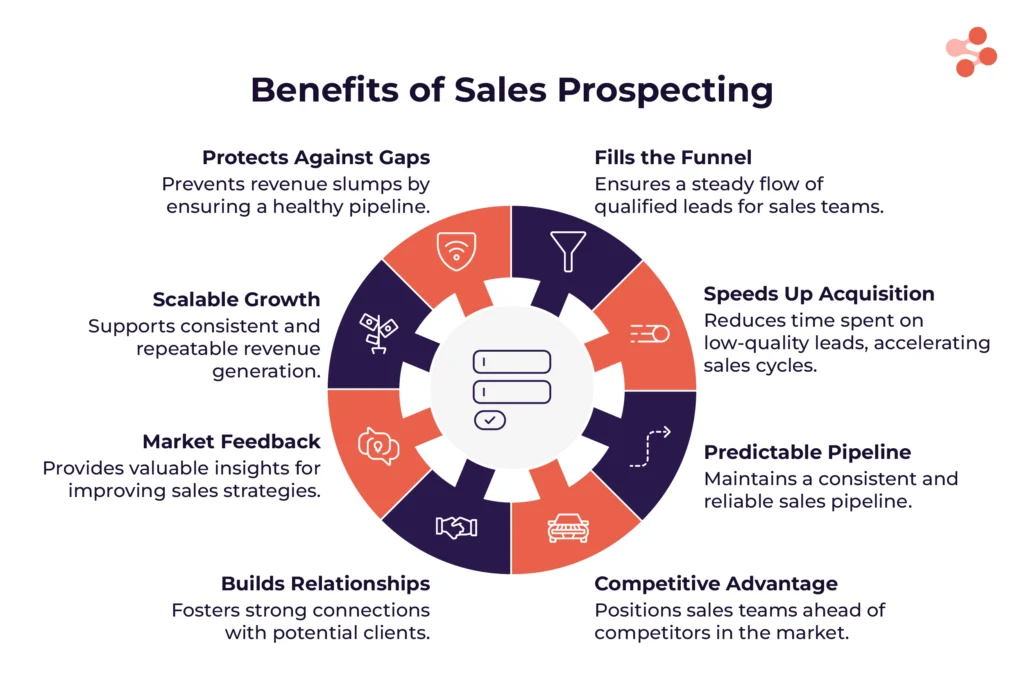
Ask Strong Discovery Questions That Reveal Urgency, Goals, and Decision Criteria
Great discovery is the foundation of great selling. Strong questions help you uncover what truly matters to the buyer, what they want to solve, how quickly they need to act, and who will shape the decision.
Instead of guessing, you get clarity. Instead of pitching broadly, you tailor every suggestion to what the buyer has already told you is important. The best salespeople are exceptional listeners with exceptional questions.
What This Looks Like in Practice: A Blog-Style Conversation Example
Buyer:
“We’re looking for support with hiring because our internal workload has grown a lot.”
Sales Rep:
“I hear you. To make sure I understand the full picture, can I ask a few questions about what’s driving the need?”
Buyer:
“Of course.”
Sales Rep:
“What changed recently that sparked the search for support?”
Buyer:
“Our team has doubled in workload, and we’ve had two unexpected departures. It’s put us behind.”
Sales Rep:
“That sounds challenging. When would you ideally like to have help in place?”
Buyer:
“Soon. Within a few weeks if possible.”
Sales Rep:
“Thank you. Knowing that timeline helps. Aside from speed, what outcome would make this partnership a win for you?”
Buyer:
“We need qualified candidates fast and less pressure on our managers.”
Sales Rep:
“Completely makes sense. And who else will be part of the final decision on bringing in outside support?”
Buyer:
“It’ll be me and our COO.”
Sales Rep:
“Perfect. This gives me a clear understanding of your timeline, desired results, and decision process. Based on what you shared, here’s what I think would help your team most.”
This style feels conversational, supportive, and strategic. It also positions the salesperson as someone who listens carefully before offering solutions.
Why This Approach Works
• You learn the buyer’s true priorities, not assumptions.
• You establish trust because the buyer feels understood.
• You uncover urgency early, which guides pacing.
• You clarify who influences the decision so you avoid misalignment.
• You tailor your recommendations directly to what matters most.
Strong discovery prevents wasted time, reduces friction, and increases close rates in every industry.
How to Use This Strategy in a Sales Context
1. Start with open-ended questions
These encourage fuller answers and help buyers express their challenges in their own words. For example:
• “What prompted you to explore support now?”
• “How is this challenge affecting your team?”
2. Explore urgency without pressure
Find out when they want results and why the timeline matters.
• “When would you ideally like to see this solved?”
• “Is there a milestone or event driving the need?”
3. Clarify goals and success outcomes
Understanding their “win” lets you aim your solution with precision.
• “What would success look like three months from now?”
• “What would feel like a major relief for your team?”
4. Identify the decision process
This removes surprises later.
• “Who else will be contributing to the decision?”
• “How do decisions like this typically move forward in your organization?”
5. Confirm and reflect back what you heard
Use their language to show alignment.
• “So the priority is speed, qualified candidates, and reducing stress on your managers. Is that right?”
6. Tailor your recommendation
Now you present a targeted plan instead of a generic pitch.
7. Keep a natural tone
Discovery should feel like a conversation, not an interrogation. Curiosity is your guide.

Use intentional silence after key questions to encourage thoughtful answers.
Silence is one of the most underrated tools in sales. After you ask an important question, pausing gives the buyer space to think, reflect, and respond honestly. Many salespeople rush to fill the silence out of discomfort, but seasoned professionals know that a short, calm pause often leads to deeper insight and stronger discovery.
Intentional silence communicates confidence. It shows that you’re listening and that you respect the buyer’s process. Buyers often fill the silence by sharing more context, clarifying concerns, or expressing what they truly want. This extra information is often exactly what moves a deal forward.
What This Looks Like in Practice: A Blog-Style Conversation Example
Sales Rep:
“You mentioned earlier that the team is feeling overwhelmed. If this problem continues for the next three months, what impact do you think it will have on your goals?”
The rep stops talking. No additional explanation. No follow-up question. Just a calm pause.
Buyer:
“…Honestly, it would slow down everything. We’d miss our internal deadlines, morale would drop even more, and we’d likely lose a few people. That’s what worries me most.”
Sales Rep:
“I appreciate you sharing that. Let me ask one more thing. What part of that impact feels most urgent for you to address first?”
Another brief pause.
Buyer:
“The deadlines. If we can get those under control, everything else feels more manageable.”
Sales Rep:
“Thank you. That gives us a clear starting point.”
The pauses allowed the buyer to think through the question and respond with meaningful detail that never would have surfaced in a rapid-fire conversation.
Why This Approach Works
• Silence creates space for honest, deeper answers.
• Buyers often reveal emotional and operational pressure points that they wouldn’t share otherwise.
• It builds trust by showing patience and confidence.
• It signals that you value the buyer’s perspective.
• You avoid interrupting thoughts that lead to meaningful discovery.
When used well, silence becomes one of your strongest listening tools.
How To Use Intentional Silence in a Sales Context
1. Ask clear, open-ended questions
Good questions lead naturally into silence. Examples:
• “What concerns you most about this challenge?”
• “How has this been affecting your team?”
• “If we solved this, what would it free you up to focus on?”
2. Stop talking for a moment
Aim for two to three seconds of quiet after the question. It will feel longer than it is, but it encourages real reflection.
3. Stay relaxed
Give visual or verbal cues that you’re listening:
• nodding
• soft “mm-hmm”
• steady eye contact
This keeps the silence comfortable.
4. Avoid filling the space with more explanation
The more you talk, the less the buyer shares. Let them lead the next moment.
5. Allow the buyer to process
People think before they speak. Silence invites them to offer meaningful context, not surface-level responses.
6. Recognize when silence reveals unspoken needs
Often the most valuable information emerges after the first two or three seconds.
7. Transition gently once they finish
Acknowledge what they shared and build from it:
“Thank you. That’s very helpful.”
“Appreciate you sharing that.”
Then move into your next question or insight.
Use Backchannel Cues Like “I see” and “Right” To Show Active Listening
Backchannel cues are short verbal signals that show you’re engaged and following what the buyer is saying. These small acknowledgments keep conversations flowing smoothly and make prospects feel heard without interrupting their thought process.
Simple cues such as “I see,” “Right,” “Got it,” “Makes sense,” or “Absolutely” help build trust and rhythm. They show that you’re fully present and absorbing the details, which creates a more comfortable and collaborative environment.
Buyers open up more when they feel listened to. When they talk more freely, you gain better information, which leads to stronger recommendations and shorter sales cycles.
What This Looks Like in Practice: A Blog-Style Conversation Example
Buyer:
“We’ve had two searches fail in the past six months. Candidates keep dropping out late in the process.”
Sales Rep:
“I see. That can be incredibly frustrating. What do you think is driving the drop-offs?”
Buyer:
“I’m not sure. Some say they got faster offers elsewhere, and others didn’t feel clear about next steps.”
Sales Rep:
“Right. So speed and clarity seem to be the sticking points. Tell me a bit about how your process is currently structured.”
Buyer:
“Usually we interview, then wait a week or two before deciding. Meanwhile, candidates often move forward with other companies.”
Sales Rep:
“Got it. That helps. When strong candidates leave the process, what impact does it have on the team?”
Buyer:
“It slows down everything. Managers feel like they’re starting from scratch each time.”
Sales Rep:
“Absolutely. And that kind of repetition drains time and energy. If we could help you shorten the process and keep candidates engaged, would that remove some pressure from your managers?”
Buyer:
“Yes, that would be a huge relief.”
Notice how the backchannel cues support the buyer’s flow without interrupting it. The rep stays present, encouraging the buyer to keep sharing. This creates a natural path toward the solution.
Why This Approach Works
• It shows genuine attention and respect for the buyer’s words.
• It builds rapport by creating a natural, conversational rhythm.
• Buyers feel understood, which makes them more open and honest.
• You gather clearer, richer details that lead to better recommendations.
• Conversations feel more human and less transactional.
Small cues make a big difference in how buyers perceive the interaction.
How To Use This Strategy in a Sales Context
1. Use cues sparingly but consistently
The goal is to support the flow, not to fill silence. A well-placed “I see” or “Makes sense” reassures the buyer without derailing the conversation.
2. Keep your tone relaxed
Backchannel cues should feel natural, not forced. A calm, conversational tone works best.
3. Pair cues with brief reflections
Short reflections amplify the feeling of being heard.
• “I see… so timing is a major factor for your team.”
• “Right… and it sounds like communication gaps also play a role.”
4. Avoid overusing the same phrase
Rotate cues so they stay fresh and genuine:
• “I see.”
• “Absolutely.”
• “Right.”
• “Got it.”
• “Makes sense.”
5. Listen for emotional cues
When buyers express stress, frustration, or urgency, a soft acknowledgment validates their experience without taking over the conversation.
6. Use cues to bridge into deeper questions
For example:
• “Got it. Can you share a little more about what happened in the last search?”
• “Makes sense. What impact has that had on your team?”
7. Let the buyer talk
Backchannel cues gently guide the conversation while allowing the buyer to lead. This often results in more honest insights and smoother rapport.
Incorporate storytelling to make your value easier to understand and remember.
Storytelling is one of the most effective tools in modern selling. Facts inform, but stories connect. A short, relevant example helps buyers picture what success could look like for their own team. It gives your value context, makes your message memorable, and helps complex services feel simple and relatable.
Effective sales storytelling is not about long, dramatic narratives. It is about quick, real-world snapshots that show what you do and how it helps. Buyers remember stories far longer than they remember features.
What This Looks Like in Practice: A Blog-Style Conversation Example
Buyer:
“We’ve been struggling to hire quickly, and I’m not sure any outside firm can really make a difference.”
Sales Rep:
“I understand why you feel that way. Let me share a quick example from a client in a similar situation.”
Buyer:
“Sure.”
Sales Rep:
“Last quarter a midsized nonprofit came to us feeling the same pressure. Their managers were overwhelmed, and their searches were dragging on for weeks. We stepped in, rebuilt the front end of their process, and delivered their first qualified shortlist within a few days. They hired two strong candidates within the first two weeks. The biggest change for them was the relief of having predictable, steady support instead of feeling behind.”
Buyer:
“That’s helpful. That sounds close to what we’re dealing with.”
Sales Rep:
“Exactly. When I heard you describe the delays and stress on your managers, it reminded me of them. Their success came from speeding up the early stages and creating a steady flow of vetted candidates. That is the same approach I would take with your team.”
Buyer:
“That gives me a clearer picture of how this could work for us.”
The story creates understanding, builds trust, and helps the buyer visualize a real outcome. It moves the conversation forward without pressure.
Why This Approach Works
• Stories make abstract services concrete and easy to grasp.
• Buyers can instantly picture how your solution might play out for them.
• Real examples build trust and credibility.
• Stories are more memorable than feature lists.
• You create emotional connection, which leads to stronger engagement.
A short story can do more than a full slide deck when it is well placed and relevant.
How To Use Storytelling in a Sales Context
1. Keep stories short
Aim for thirty to sixty seconds. Short stories fit naturally into conversation and keep attention strong.
2. Choose stories that mirror the buyer’s situation
Pick examples that share similar industry, challenges, size, or goals. Buyers engage much more when they can relate to the characters in your story.
3. Focus on the before and after
A simple structure works well:
• “They were here.”
• “We helped them with this.”
• “Now they are here.”
This gives a clear arc and shows the practical value of what you offer.
4. Use real language from the original client
If the client said something memorable, include it. Natural phrases stick.
5. Connect the story directly back to the buyer
After the story, tie the key points to their situation.
• “When you mentioned delayed searches, it reminded me of this experience.”
• “Your managers may feel the same relief they did.”
6. Use stories to simplify complexity
If your offering has many steps or features, tell a story instead of listing everything. Stories make the process easier to understand.
7. Keep stories ready in a mental library
Prepare three to five go-to stories for different scenarios such as speed, quality, cost savings, or leadership support.
Use social proof through testimonials or client wins to strengthen trust.
Social proof is a powerful confidence builder in product sales. Buyers often hesitate because they are unsure whether the product will perform as promised. When they hear that other customers achieved real, measurable results, it reassures them and lowers perceived risk.
Sharing quick examples, testimonials, or performance metrics helps prospects picture what the product can do for them. Great sales reps blend social proof into conversation naturally so it feels informative rather than promotional.
What This Looks Like in Practice: A Blog-Style Conversation Example
Buyer:
“We’ve tried a few workflow tools before, but adoption was tough and the team didn’t stick with any of them. I’m not convinced another platform will solve the problem.”
Sales Rep:
“I understand why you feel that way. A lot of teams have the same concerns before switching tools. Let me share a quick example from a customer who was in a very similar position.”
Buyer:
“Sure, I’m open to hearing it.”
Sales Rep:
“Last quarter, a tech company with about 80 employees reached out for the same reason. They had tried multiple systems, but none of them were intuitive enough for consistent use. After implementing our platform, their adoption hit 92 percent in the first month. Their operations lead told us, ‘This is the first tool our teams actually want to use.’ That shift helped them streamline project handoffs and cut their task completion times significantly.”
Buyer:
“That’s actually impressive. Adoption is our biggest concern.”
Sales Rep:
“That’s why I thought of them. Your team may experience similar improvements since ease of use is a major strength of this product. I can show you how their setup compares to what you’re looking for.”
This version keeps the example short, relatable, and tied directly to the buyer’s concern in a product context.
Why This Approach Works
• Buyers trust real experiences more than product claims.
• Social proof reduces fear that they’ll end up with another underperforming tool.
• It demonstrates impact through real-world outcomes.
• It helps buyers visualize success with the product.
• It shifts the tone from a pitch to evidence-based guidance.
How To Use Social Proof in a Product Sales Context
1. Share specific, outcome-focused stories
Show how a customer used the product and the results they achieved. Keep it short and meaningful.
2. Match the example to the buyer’s challenge
If they worry about adoption, performance, integration, cost, or speed, use a story that reflects that concern.
3. Use customer language
Real quotes are more believable and memorable than descriptions.
4. Connect the story back to the buyer
For example:
“Since your team is facing adoption hesitation, this example may be helpful.”
5. Mix formats depending on the moment
You can use:
• quoted testimonials
• performance numbers
• before-and-after examples
• brief case snapshots
• customer feedback excerpts
6. Let the proof speak naturally
Avoid overselling. The calm, matter-of-fact delivery makes social proof more credible.
Always clarify next steps at the end of every interaction.
Clear next steps keep deals moving. When conversations end with ambiguity, buyers get busy, decisions stall, and momentum fades. Great salespeople wrap up every call or meeting with a simple, confident summary of what happens next and who is responsible for each part.
This removes guesswork, reduces back-and-forth, and helps the buyer feel supported rather than overwhelmed. It also positions you as an organized partner who guides the process with ease.
What This Looks Like in Practice: A Blog-Style Conversation Example
Buyer:
“This looks promising. I want to take what we discussed and share it with the rest of the team.”
Sales Rep:
“Great. To make sure we’re aligned, can we walk through the next steps together?”
Buyer:
“Absolutely.”
Sales Rep:
“Perfect. Based on what you said, here’s what I recommend. You’ll share the overview internally this afternoon. I’ll send a short summary email with the key points and the sample configuration you requested. After your team reviews it, let’s regroup for a quick call early next week. Would Tuesday or Wednesday work better for you?”
Buyer:
“Wednesday works.”
Sales Rep:
“Great. I’ll send a calendar invite for Wednesday at 10 a.m. Once your team provides feedback, we can finalize the version that best fits your needs.”
Buyer:
“That sounds perfect.”
Nothing is left vague. Both sides know exactly what comes next, when it will happen, and who is doing what. This structure makes the process feel easy and manageable.
Why This Approach Works
• It prevents deals from drifting into a long, undefined pause.
• Buyers appreciate clarity and structure, especially when juggling busy workloads.
• It positions you as organized, proactive, and confident.
• It reduces the need for unnecessary follow-up emails.
• It builds momentum and adds a sense of progress.
When next steps are clear, the buyer feels supported, not pressured.
How To Use This Strategy in a Sales Context
1. Summarize the key points in one sentence
Example:
“Just to confirm, the priority is speeding up your team’s workflow and ensuring easy adoption.”
2. Propose the next steps clearly
Offer a simple, actionable suggestion.
“Here’s what I recommend for next steps…”
3. Assign responsibilities
Outline who does what.
“I’ll send the follow-up summary, and you’ll share it internally.”
4. Lock in a time
Don’t leave timing open-ended.
“Would early next week work?”
“Which day is better for you?”
5. Confirm alignment
End with a quick check-in.
“Does that match what you had in mind?”
6. Follow through quickly
Send the recap email shortly after the call. This reinforces your professionalism and keeps the buyer confident.
7. Keep the language friendly and steady
Avoid anything that feels pushy. A supportive tone encourages cooperation and keeps engagement high.
Stand out with short video or voice notes when appropriate.
Short video and voice notes have become powerful tools for modern sales communication. They cut through crowded inboxes, feel more personal than text, and help convey tone, confidence, and sincerity in a way written messages sometimes cannot.
Used thoughtfully, these quick snippets make you memorable. They show effort, save time, and often get faster responses because buyers can absorb the content quickly without reading long emails.
They work best when your goal is to make something easy to understand, build rapport, or add a warm human touch.
What This Looks Like in Practice: A Blog-Style Conversation Example
Scenario:
You just wrapped a discovery call and want to reinforce a key point while differentiating yourself from other vendors.
Voice Note Example:
“Hi Karen, thank you again for the great conversation today. I wanted to quickly recap the priority you mentioned about simplifying your team’s workflow. I’ve already started pulling together a few tailored options for you and will send them shortly. If you have any questions before then, feel free to reply directly here. Looking forward to helping your team move forward.”
Why this works:
• It’s warm and personal.
• It recaps value without repeating the whole meeting.
• It is short enough to listen to while walking between meetings.
• It reinforces that you listened carefully.
Short Video Example:
You record a quick 20–30 second video on your phone:
“Hi Karen, great speaking with you today. I put together a short walkthrough of the feature we discussed so you can share it internally. I know your team wants an easy way to visualize how this will simplify their workflow. Take a look, and let me know if you’d like a deeper demo. Happy to help anytime.”
Why this works:
• It humanizes you instantly.
• It shows confidence and preparation.
• It gives the buyer something they can forward internally.
• It stands out from standard follow-up emails.
Most buyers don’t receive personalized videos from sales reps, so even a small effort feels meaningful.
Why This Approach Works
• Buyers respond faster to warm human messages.
• Tone and sincerity come through clearly.
• It builds trust early in the relationship.
• It differentiates you in a crowded market.
• Videos and voice notes are easy to share across teams.
• They reinforce clarity and reduce misunderstandings.
This helps you remain memorable long after the conversation ends.
How To Use Short Video or Voice Notes in a Sales Context
1. Keep them under 30 seconds
Short and respectful of the buyer’s time. This boosts completion rates and avoids overwhelming the recipient.
2. Focus on one clear point
Choose a single purpose such as:
• quick recap
• thank you
• next step reminder
• micro-demo
• answering a question
• offering a resource
3. Maintain a warm, steady tone
Speak as if you’re talking to a colleague. Friendly and professional works best.
4. Use natural lighting and a calm setting
For video, a quick, clean background and steady voice make a big difference.
5. Don’t resell
These messages should feel supportive, not pitchy. You’re adding clarity, not pressure.
6. Send through the channel they prefer
If they prefer email, send a video link.
If they prefer text or a platform like LinkedIn, send a short voice note.
7. Follow with a brief written summary
A single line such as:
“Here’s a quick voice note with the recap we discussed.”
This covers accessibility and professionalism.
Prioritize prospects showing strong intent signals.
Strong intent signals help you understand who is most likely to buy. They highlight the prospects who are already researching solutions, revisiting your materials, replying faster, asking detailed questions, or showing indicators that they’re ready to move forward.
Great sales professionals don’t treat every lead equally. They focus first on the prospects displaying behaviors that say, “I’m evaluating this seriously.” This creates efficiency, increases close rates, and reduces time spent chasing unresponsive leads.
Intent isn’t guesswork. It shows up through actions. When you prioritize those actions, your pipeline becomes easier to manage and far more predictable.
What This Looks Like in Practice: A Blog-Style Conversation Example
Sales Rep (internal meeting with manager):
“I’ve got a full list of leads, but only a few seem active. I’m not sure where to focus.”
Manager:
“Let’s look at intent signals. Who’s opening your emails multiple times? Who downloaded something? Who asked for a walkthrough? These are the cues we should prioritize.”
Rep:
“That makes sense. There’s one prospect who opened my follow-up three times within an hour and clicked into the product comparison page.”
Manager:
“That’s a great example. Someone reengaging like that is leaning in. Reach out with a quick, helpful next step.”
Rep:
“Something like: ‘I saw you were reviewing the comparison. Would a brief demo of that feature help answer any questions?’”
Manager:
“Exactly. Meet them where they are. Strong intent should always guide the day’s outreach order.”
Rep:
“I’ll start with those top-engagement prospects first, then move to broader outreach.”
Manager:
“That rhythm keeps your time focused on people who are ready to move.”
This example shows how intent signals turn a long, unfocused list into a prioritized, manageable workflow.
Why This Approach Works
• Prospects who show intent convert at much higher rates.
• You spend time where the buying energy already exists.
• You shorten sales cycles because engaged prospects move faster.
• You reduce burnout by avoiding low-value chasing.
• You create better experiences because outreach feels timely and relevant.
Intent signals remove guesswork and help you focus on the right opportunities.
How To Use Intent Signals in a Sales Context
1. Identify your strongest intent indicators
Common signals include:
• repeated email opens
• clicks on product pages
• downloading resources
• visiting pricing pages
• requesting a demo
• replying quickly
• revisiting previous messages
• asking detailed questions
• bringing additional stakeholders into the conversation
These signals show curiosity turning into evaluation.
2. Rank your daily outreach
Start with prospects who are:
• most engaged
• most active
• closest to a decision
• showing accelerated behavior
This ensures momentum never stalls.
3. Match your follow-up to their action
If they clicked the pricing page, offer clarity.
If they watched a video, offer a walkthrough.
If they opened an email repeatedly, check in with a simple question.
Aligning your message with their behavior feels natural and helpful.
4. Move disengaged prospects into a nurture rhythm
Don’t ignore them, but don’t spend the majority of your time there.
Use periodic value-based follow-up while focusing effort on active buyers.
5. Use calm, supportive language
Intent-based outreach shouldn’t feel like surveillance. Keep things friendly:
“Thought this might help as you explore options…”
“I wanted to share a quick resource based on what you’re reviewing…”
6. Track patterns
Over time, you’ll learn which signals lead to conversions. This improves forecasting and helps refine your process.
7. React quickly
Intent cools fast. Timely responses make a big impact.
Build relationships with a long-term mindset.
Sustainable sales success comes from relationships, not one-off transactions. When you approach every interaction with a long-term mindset, buyers feel respected, supported, and valued far beyond the immediate deal. This creates trust, referrals, repeat business, and a professional network that strengthens your pipeline for years.
Great salespeople don’t push for quick wins. They focus on being helpful, consistent, and honest. They show genuine interest in the buyer’s goals and stay connected even after the sale closes. Over time, this builds a reputation that makes future conversations easier and more productive.
What This Looks Like in Practice: A Blog-Style Conversation Example
Scenario:
A prospect ultimately decides not to purchase right now. A short-term seller walks away. A long-term seller stays in the relationship.
Buyer:
“After reviewing everything, we’re going to hold off for now. Budget shifted and we need to revisit this next quarter.”
Sales Rep:
“Thank you for letting me know. I completely understand. Before we wrap this round, is there anything I can share that might help you during this interim period?”
Buyer:
“Honestly, the setup checklist you mentioned would be helpful for our internal planning.”
Sales Rep:
“Happy to send it over. I’ll include a couple of additional tips that can help keep things streamlined while you prepare for next quarter.”
Buyer:
“Thank you. That would be great.”
Sales Rep:
“Absolutely. I’ll send it today. And if anything changes or you just want to bounce ideas around, I’m here anytime. Looking forward to staying in touch.”
Two months later, the rep sends a short, helpful article about a challenge the buyer mentioned earlier. No pitch. Just value.
Buyer:
“Thanks for sending this! The timing is perfect. Can we revisit the product next week?”
Because the rep stayed present, supportive, and professional, the relationship remained warm. This approach turns “not now” into “not yet.”
Why This Approach Works
• Buyers feel cared for rather than pursued.
• You build trust that lasts far beyond individual deals.
• Warm relationships lead to referrals, repeat business, and advocacy.
• Buyers remember steady, genuine support.
• It sets you apart from sellers who disappear after a “no.”
Long-term relationships create long-term results.
How To Apply This Strategy in a Sales Context
1. Stay helpful beyond the immediate sale
If a prospect pauses or declines, continue offering small resources, insights, or relevant updates. No pressure. Just value.
2. Listen for personal details
Company transitions, team goals, upcoming projects, or pain points make great touchpoints later. Even a simple, “How did that product rollout go?” shows you listened.
3. Check in intentionally
Monthly or quarterly check-ins work well when they include something useful:
• a quick benchmark
• a relevant article
• an industry update
• a simple idea that solves a problem they mentioned
4. Celebrate their wins
If they share something positive, acknowledge it. People remember who cheered for them.
5. Be consistent
Long-term trust comes from predictable steadiness. Even small follow-ups matter.
6. Avoid transactional behavior
Don’t disappear after a “no” and don’t flood them when they say “maybe.” Build a calm rhythm instead.
7. Protect your integrity
If the product or service is not the right fit, say so. Buyers respect sellers who put their needs first.
8. Ask, “How can I make this easier for you?”
This simple line reinforces partnership instead of pressure.
Lead with clear, straightforward communication instead of jargon.
Buyers appreciate clarity. They are juggling deadlines, meetings, and competing priorities, so the easier you make it to understand your message, the faster trust builds. Clear communication shows confidence. Jargon, buzzwords, and overly technical explanations often create confusion and slow the conversation down.
Great sales professionals speak in simple, direct language that focuses on what matters: the buyer’s goals, challenges, and desired outcomes. When your message is easy to grasp, buyers stay engaged and feel supported rather than overwhelmed.
What This Looks Like in Practice: A Blog-Style Conversation Example
Buyer:
“We’ve looked at several platforms, but the explanations always get overly complicated. We just need something that helps our team stay organized.”
Sales Rep:
“Completely understand. Let me keep this simple. Our platform does three things really well: it helps your team see exactly what needs to be done, it keeps tasks moving without extra chasing, and it gives you a quick overview of progress at a glance.”
Buyer:
“That’s refreshing. Most people hit us with a ton of technical features.”
Sales Rep:
“I can absolutely show you those if you’re interested, but the core idea is easy. You’ll get a tool that cuts down on back-and-forth, helps everyone stay aligned, and gives you visibility without extra work. The rest is just details.”
Buyer:
“That’s exactly the kind of explanation we need.”
Sales Rep:
“Perfect. Before we dive deeper, what’s the biggest bottleneck you want this to solve first?”
The rep uses clean, simple phrasing. No unnecessary terminology. No complex explanations. The buyer understands immediately and feels at ease.
Why This Approach Works
• Clear communication builds trust faster than complicated explanations.
• Buyers understand your value without extra mental effort.
• Conversations move smoothly because there are fewer misunderstandings.
• You stand out from competitors who overload buyers with technical talk.
• Buyers are more likely to stay engaged and ask meaningful questions.
Clarity creates momentum.
How To Use Straightforward Communication in a Sales Context
1. Start with the simplest version of your message
For example:
“Here’s the easiest way to think about what our product does…”
Simple opening lines help buyers relax.
2. Use everyday language
Replace phrases like “leveraged optimization framework” with:
“It helps you get work done faster and with fewer steps.”
3. Focus on the outcome, not the terminology
Talk about:
• speed
• clarity
• savings
• relief
• efficiency
• fewer headaches
These resonate more than technical labels.
4. Break complex ideas into three-part summaries
Buyers listen better when information is grouped clearly:
“It does three things…”
“This affects two main areas…”
“There’s one key step…”
5. Offer details only when the buyer asks
This keeps the conversation focused and prevents overload.
“I can walk through the technical part, but only if it would be helpful.”
6. Watch the buyer’s cues
If their expression changes or they hesitate, pause and simplify.
“Let me rephrase that in a simpler way.”
7. Always aim for clarity, not cleverness
Your strongest message is the one the buyer can repeat accurately to their team.

Protect your time by focusing on the activities that drive revenue.
High-performing sales professionals treat their time like a strategic resource. They understand that not every task contributes equally to growth, and they make conscious choices about where to invest their limited attention. When you focus on high-impact activities such as prospecting, discovery, follow-ups, and closing conversations, your pipeline grows steadily and predictably.
The opposite is also true. When your day gets filled with low-value tasks, unnecessary admin work, or time-consuming distractions, momentum slows and opportunities slip away. Protecting your time ensures that your energy supports revenue, not noise.
What This Looks Like in Practice: A Blog-Style Conversation Example
Scenario:
A sales rep is feeling busy, but not productive. Their manager helps them redirect their focus.
Sales Rep:
“I’m slammed every day, but my pipeline isn’t moving. I feel like I’m spinning.”
Manager:
“I hear you. Let’s break this down. What’s taking most of your time right now?”
Sales Rep:
“Honestly? Internal chats, updating notes, fixing reports, and answering random requests.”
Manager:
“Those tasks matter, but they don’t grow revenue. Let’s refocus your energy. What would it look like if you spent the first hour of every morning on revenue-driving work only? Prospecting, follow-up, and advancing active deals.”
Sales Rep:
“That would actually feel amazing, but I get pulled into so many side tasks.”
Manager:
“Then let’s protect your highest-impact time. Block it on your calendar. Turn off notifications. Close internal chat. If a task doesn’t move a deal forward, save it for later.”
Sales Rep:
“Yeah… that would give me space to do real sales work.”
Manager:
“Exactly. You don’t need more hours. You just need more hours spent doing the right things.”
Over the next two weeks, the rep’s pipeline activity increases, conversations progress more quickly, and results improve simply because they protected the parts of their day that actually matter.
Why This Approach Works
• You maximize time spent on activities that produce real revenue.
• You avoid burnout caused by constant context switching.
• You stay consistent instead of reactive.
• Deals progress faster because you give them the attention they deserve.
• You create predictability in your month, not chaos.
Protecting your time improves your performance and your peace of mind.
How To Use This Strategy in a Sales Context
1. Identify your highest-impact tasks
These typically include:
• prospecting and outreach
• discovery calls
• scheduled demos
• follow-up with active buyers
• proposal work
• engaging warm leads
If it affects pipeline movement directly, it is high-impact.
2. Time-block your revenue hours
Choose a protected window daily (often mornings) where you do only revenue-related work. This becomes your non-negotiable time.
3. Limit internal distractions during those blocks
• mute notifications
• close chat windows
• silence your phone
• avoid unnecessary meetings
Most distractions can wait an hour.
4. Push low-value tasks to the end of the day
Examples include:
• report clean-up
• internal emails
• admin updates
• internal follow-ups
These jobs matter, but they don’t create revenue.
5. Use a simple daily plan
Try this structure:
• 30 minutes prospecting
• 20 minutes follow-up
• 10 minutes deal advancement
This alone creates a strong, predictable rhythm.
6. Evaluate tasks with one question
“Does this help me move a deal forward?”
If not, it can be delayed.
7. Protect your calendar like your quota depends on it
Because it does.
Match the energy and communication style of your prospects.
People feel more comfortable with someone who communicates like they do. When you match a prospect’s pace, tone, and style, you create instant rapport and make the conversation feel easier. This doesn’t mean copying them or being inauthentic. It simply means adjusting your approach so the interaction feels familiar and comfortable to the buyer.
Some prospects are direct and fast-paced. Others are thoughtful and speak slowly. Some want bullet points. Others want stories. When you notice these cues and adapt, you reduce friction, increase trust, and keep the conversation flowing smoothly.
What This Looks Like in Practice: A Blog-Style Conversation Example
Scenario:
Two prospects with very different communication styles.
Prospect A: Fast, direct, concise
Buyer:
“Let’s keep this quick. What exactly does your product do, and how long does setup take?”
Sales Rep:
“Absolutely. Here’s the simple version. It helps your team organize tasks, automate handoffs, and track progress with minimal setup. Most teams start using it within a day. Do you want a quick example of how it works?”
Buyer:
“Yes, send it.”
Short sentences. Direct answers. No fluff. The rep mirrors the buyer’s quick, efficient style, which keeps the conversation aligned.
Prospect B: Thoughtful, conversational, detailed
Buyer:
“We’ve tried a few solutions over the years. Some worked for a while, but we always hit roadblocks. I’m hoping this time we find something that grows with us.”
Sales Rep:
“I appreciate you sharing that. It sounds like finding something sustainable matters just as much as solving today’s challenge. If you’re open to it, I’d love to hear what those earlier roadblocks looked like so we can make sure this fits your long-term goals.”
Buyer:
“That would be great. Here’s what happened…”
Here, the rep slows down, uses warm language, and opens the door for a deeper conversation. This builds trust because it respects the buyer’s natural communication rhythm.
Why This Approach Works
• Matching style creates comfort, which leads to openness.
• Buyers feel understood without having to adjust to your pace.
• You reduce miscommunication by aligning your tone with theirs.
• Prospects naturally stay engaged because the conversation feels familiar.
• It helps you build trust quickly, even with limited time.
People buy from people who make them feel at ease.
How To Use This Strategy in a Sales Context
1. Listen closely at the beginning
The first sixty seconds often reveal a buyer’s natural style. Notice their:
• pace
• tone
• level of formality
• choice of words
• focus on details vs big picture
These cues guide your response.
2. Mirror, don’t mimic
You’re aiming for alignment, not imitation. Slight adjustments create rapport without feeling forced.
3. Match their level of detail
If they want summary, keep it tight.
If they want explanation, expand thoughtfully.
4. Match their pace
Fast-paced prospects want efficiency.
Slower-paced prospects appreciate space to think.
5. Match tone and formality
If they say, “Hey, thanks for chatting,” respond casually.
If they say, “Thank you for your time today,” stay professional and polished.
6. Stay true to yourself
You don’t need to change your personality. You’re simply meeting the buyer where they naturally communicate.
7. Use their language
Echoing key phrases they use helps reinforce understanding.
If they say “streamline,” use “streamline.”
If they say “simplify,” use “simplify.”
8. Adjust dynamically
Buyers sometimes shift tone mid-conversation. Stay flexible.
Keep your CRM organized and accurate to support better decisions.
Your CRM is only as powerful as the information inside it. When notes are incomplete, fields are outdated, or activity is scattered, forecasting becomes guesswork and deals slip through the cracks. On the other hand, a clean, accurate CRM gives you clarity, helps you prioritize effectively, and ensures your whole team can move quickly with the right information.
Great sales professionals treat CRM updates as part of the sales process, not an afterthought. Clean data protects your pipeline, strengthens handoffs, and makes it easier to identify real opportunities.
What This Looks Like in Practice: A Blog-Style Conversation Example
Scenario:
A rep hands off an account to a colleague, and clean CRM data makes the transition seamless.
Sales Rep:
“I have a call tomorrow with the prospect you spoke with last week. Anything important I should know?”
Original Rep:
“All set. Everything’s in the CRM. Notes from the last call, their priorities, the timeline they shared, and the documents they reviewed are all attached. The next step you need to take is already listed.”
Sales Rep:
“This is perfect. I can see exactly where they are and what they’re expecting next. This will make the call really smooth.”
Original Rep:
“That’s why I keep everything updated. Makes it easier for the whole team.”
Clean CRM data gives the new rep instant context. No scrambling. No digging. No “let me check on that.” Just clarity and confidence.
Why This Approach Works
• Accurate CRM data strengthens forecasting and pipeline planning.
• It prevents repeated questions that frustrate buyers.
• It enables any team member to pick up the conversation instantly.
• It reduces stress by ensuring nothing gets lost.
• It helps you identify real opportunities versus low-probability leads.
Clean data equals better decisions.
How To Keep Your CRM Organized and Effective
1. Update notes immediately after conversations
Short, simple summaries work best. Include:
• buyer goals
• pain points
• timeline
• next step agreed on
• any commitments you made
Fresh notes are far more accurate than recollections later.
2. Keep fields current
Update:
• status
• stage
• forecast category
• opportunity value
• primary contact
This supports accurate reporting and prioritization.
3. Use consistent formatting
Clear note structure helps everyone read and understand quickly. Examples:
• “Challenge:”
• “Goal:”
• “Next Step:”
• “Decision Maker:”
Consistency reduces confusion.
4. Log all touchpoints
Emails, calls, demos, and follow-ups should be recorded. This gives a full picture of engagement and prevents repeated outreach.
5. Clean out stale opportunities
A cluttered CRM leads to false pipeline confidence. If an opportunity has gone cold, mark it accurately or move it out.
6. Tag or categorize accounts properly
Correct tagging helps with segmentation, reporting, and targeted outreach.
7. Attach key documents
Proposals, worksheets, and summaries should be linked, so anyone can see the full history instantly.
8. Use your CRM to guide your day
Review tasks and follow-ups first. A clean CRM becomes your daily roadmap.
9. Keep language simple
Use straightforward notes your teammates can understand quickly. This supports smooth handoffs and consistent client experience.
10. Treat your CRM like your most important sales tool
A clear CRM is your memory, your planner, and your pipeline health check, all in one place.
Share insights or helpful context to establish credibility as a trusted guide.
One of the fastest ways to earn a buyer’s confidence is by offering useful insights that help them understand their situation more clearly. When you provide context, data, trends, or simple explanations that make their decision easier, you shift from being a salesperson to being a trusted guide.
Buyers want partners who help them think, not just pitch. When you share meaningful information tailored to their goals, you demonstrate expertise, reduce uncertainty, and build trust in your recommendations.
What This Looks Like in Practice: A Blog-Style Conversation Example
Scenario:
A buyer is evaluating multiple products and feels overwhelmed by comparisons.
Buyer:
“We’ve looked at so many tools that they’re all starting to blend together. It’s hard to know what actually matters.”
Sales Rep:
“I completely understand. Let me offer a quick insight that might simplify things. Most teams in your position focus on three main factors: ease of adoption, visibility into work, and how well the tool supports cross-team collaboration. If those three areas are strong, the rest tends to fall into place.”
Buyer:
“That’s helpful. I hadn’t thought about it that way.”
Sales Rep:
“And here’s something we’ve seen with other companies your size. Tools that look impressive on paper often fail because they take too long for the team to get comfortable using them. Adoption ends up being the deciding factor far more often than features.”
Buyer:
“That’s interesting. Adoption has definitely been a pain point for us.”
Sales Rep:
“Exactly. If you’d like, I can walk you through the adoption timeline we typically see and how to avoid the common pitfalls. It’ll help you compare your options with more clarity.”
The rep isn’t pitching. They’re guiding. They’re making the buyer’s decision easier by sharing meaningful context.
Why This Approach Works
• Buyers appreciate clarity during complex decisions.
• Shared insights position you as a knowledgeable, experienced resource.
• You reduce confusion, which builds trust.
• When you help buyers understand the landscape, they rely on your perspective.
• It shows you’re invested in their success, not just your sale.
When you teach, buyers lean in.
How To Share Insights Effectively in Sales Conversations
1. Offer insights that simplify the buyer’s thinking
Share frameworks, trends, or quick explanations that make decision-making easier.
Examples:
• “Most teams narrow options by focusing on these three criteria…”
• “Here’s what similar companies are prioritizing right now…”
2. Use real observations from other customers
This adds credibility without sounding like a pitch.
• “We’ve noticed that companies your size often struggle most with…”
Buyers appreciate industry context.
3. Keep insights brief and digestible
Short, helpful points beat long explanations. The goal is clarity, not complexity.
4. Tailor context to the buyer’s specific situation
Make it feel relevant.
• “Since you mentioned team bandwidth, here’s something that might help…”
5. Ask if they’d like more detail
This avoids overwhelming the buyer.
• “Would you like me to expand on that?”
Let them pull the detail rather than pushing it.
6. Use insights as bridges to deeper conversation
A well-placed insight opens the door to more discovery:
• “That’s why many teams take this approach… How does that compare to what you’re seeing internally?”
7. Stay helpful, not promotional
Insights should feel like guidance, not disguised sales points.
Write concise messages that are easy to read and respond to.
Buyers are flooded with messages every day, and most of them are long, dense, and hard to process quickly. The easier you make your message to read, the more likely it is the prospect will respond. Concise messages show respect for their time, keep the focus clear, and help your value stand out without extra noise.
Great sales professionals avoid long paragraphs and complicated explanations. Instead, they send short notes with a clear purpose and a single, simple action the buyer can take. When your message is clean and direct, the reader feels relief instead of pressure.
What This Looks Like in Practice: A Blog-Style Conversation Example
Scenario:
A rep wants to follow up with a prospect who is busy and likely skimming their inbox.
Long version that most buyers ignore:
“Hi Laura, I wanted to reach out to follow up on our previous discussion regarding the platform’s features and capabilities. Based on what you shared about your team’s workflow challenges, I believe our solution can really streamline your operations and reduce time spent on administrative tasks. I’m attaching a long summary of everything we discussed and a few additional points I think you’ll find interesting. Let me know when you have a moment to review everything.”
Concise, high-impact version:
“Hi Laura, here’s a quick next step. I put together a 60-second overview based on your workflow challenges. Want me to send it?”
Buyer:
“Yes, please send it.”
The second message is simple, direct, and easy for a busy person to respond to in seconds. No long text. No unclear request. Just a clean path forward.
Why This Approach Works
• Short messages are easier to read quickly.
• Buyers understand exactly what you want from them.
• Clear, focused messages get higher response rates.
• You stand out from long, cluttered emails in their inbox.
• Concise communication shows professionalism and confidence.
People respond faster when you make the decision effortless.
How To Write Concise, High-Response Messages
1. Stick to one purpose per message
Don’t combine multiple asks or explanations. Choose one goal and keep the message centered on it.
2. Use short sentences and clean structure
Aim for two to four lines at most. If you have more to say, save it for the next step.
3. Make the action clear
Buyers should know exactly what you want them to do.
Examples:
• “Want me to send a quick overview?”
• “Is Tuesday or Wednesday better for a short call?”
• “Should I prepare a sample setup?”
4. Drop unnecessary background
If you can remove a sentence without losing meaning, remove it.
5. Write like you speak
Simple, conversational language reads faster and feels more natural.
6. Use strong openings
Start with something useful or actionable.
Examples:
• “Quick question…”
• “Short note…”
• “Here’s an easy next step…”
7. End with a simple yes/no prompt
This makes responding effortless.
Examples:
• “Would that be helpful?”
• “Want me to send it?”
• “Should I prepare that for you?”
8. Respect the reader’s time
Buyers notice when your messages are clean and efficient. It builds trust.
Personalization wins
Buyers can spot generic outreach instantly. Personalized communication stands out because it shows care, relevance, and genuine attention. When your message reflects the prospect’s role, priorities, and real challenges, it feels like it was written for them instead of at them.
Great sales professionals use personalization to build trust, create connection, and start conversations that feel meaningful. Whether it’s a reference to something the buyer said, a detail about their company, or a tailored suggestion based on their goals, personalization makes your outreach far more compelling.
What This Looks Like in Practice: A Blog-Style Conversation Example
Scenario:
A rep reaches out to a prospect who recently posted online about workflow challenges.
Generic Message Most Prospects Ignore:
“Hi Taylor, I’d love to tell you about our platform. We help companies improve productivity and streamline workflows. Let me know if you have time to connect.”
There’s no relevance. No connection. No reason for Taylor to care.
Personalized Message That Gets a Response:
“Hi Taylor, I saw your post about your team juggling multiple projects and trying to reduce time spent coordinating tasks. That challenge comes up a lot with fast-growing teams, and we’ve helped several companies solve something similar this year. I put together a quick, 90-second overview showing the exact workflow setup they used. Want me to send it?”
Why this works:
• It references something real about Taylor.
• It acknowledges their specific challenge.
• It offers a tailored resource instead of a pitch.
• It asks a simple, easy question that’s effortless to answer.
Most buyers respond to this kind of outreach because it feels human and relevant. It shows the rep actually understands what they are trying to solve.
Why Personalization Works
• Buyers respond when they feel seen and understood.
• Personalized messages feel conversational, not transactional.
• It shows you spent time preparing, which builds trust.
• Tailored outreach makes your value easy to connect with their situation.
• It dramatically increases response and meeting rates.
A personalized message turns a cold outreach into a real conversation.
How To Use Personalization Effectively in Sales
1. Reference something specific
Use any real detail that supports relevance:
• their recent announcement
• a challenge they mentioned
• an update from their team
• something from their website or product
• a line from their job description
• a comment they made in a meeting or email
Specificity earns attention.
2. Tailor your value to their world
Connect your solution directly to something they care about:
• “Since you mentioned adopting new tools quickly…”
• “Because your team is growing so fast…”
• “Based on last quarter’s goals…”
Relevance builds trust.
3. Keep it short
Personalization doesn’t mean writing a novel. Two or three tailored sentences are plenty.
4. Use their language
Mirror words they use. If they say “streamline,” use “streamline.” If they say “reduce friction,” use that phrase. It creates instant resonance.
5. Avoid empty compliments
Skip meaningless lines like:
“I was impressed by your background.”
Instead, be specific:
“I appreciated what you said about improving your team’s workflow efficiency.”
6. Personalize the action you propose
Offer something helpful based on what you know:
• a short guide
• a quick video
• a mini example
• a simple next step
• a two-minute demo tailored to their challenge
7. Use personalization throughout the relationship
Not just at the beginning.
• reference earlier conversations
• celebrate their wins
• send insights tied to their goals
• recap key details in follow-up
Consistency deepens trust.
Follow up after the sale to strengthen relationships and foster future opportunities.
Great sales professionals know the relationship doesn’t end when the deal closes. Post-sale follow-up shows professionalism, care, and long-term commitment. It reassures the buyer that you’re invested in their success, not just the transaction.
These small, thoughtful touches build trust, support retention, and turn satisfied buyers into repeat customers and enthusiastic advocates. When you check in regularly with genuine interest, you create a partnership that lasts.
What This Looks Like in Practice: A Blog-Style Conversation Example
Scenario:
A week after a customer begins using a new product, the sales rep reaches out.
Sales Rep:
“Hi Alex, hope the first week with the platform has gone smoothly. I wanted to check in and see how your team is settling in. Any early questions I can help with?”
Buyer:
“Thanks for reaching out. We’re doing well so far, but a couple of team members are still getting comfortable with the workflow dashboard.”
Sales Rep:
“Good to hear the rollout is going well overall. To help with the dashboard, I can send a short, two-minute tutorial that many teams find helpful. Would you like me to forward it?”
Buyer:
“Yes, that would be great.”
Sales Rep:
“Perfect. I’ll send it right over. Also, if you’re open to it, I’d love to reconnect in a couple of weeks just to make sure the system is supporting your goals. We can review your team’s early usage patterns and talk about next steps for optimizing things.”
Buyer:
“That sounds good. Let’s do that.”
A month later, the rep follows up again with a helpful trend or best practice. No pitch. Just value. This keeps the relationship warm and supportive while opening the door to future upgrades, referrals, or expansion when the timing is right.
Why This Approach Works
• It reinforces that you’re committed to their success.
• Buyers remember who stayed present after the contract was signed.
• It creates trust that leads to referrals and expanded opportunities.
• It helps catch issues early before they become frustrations.
• You gather valuable insight that improves your long-term service.
A thoughtful post-sale rhythm strengthens your reputation and your pipeline.
How To Follow Up After the Sale in a Sales Context
1. Make your first follow-up quick and supportive
Reach out within a few days or a week:
• “How is everything going so far?”
• “Any questions I can help with?”
This shows you care about their experience.
2. Share a small resource
A guide, tip sheet, quick video, or short best practice reinforces value and builds goodwill.
3. Acknowledge early wins
If they mention progress, celebrate it:
“Great to hear your team is already seeing improvements.”
4. Offer a minor, optional next step
Something lightweight such as:
• a ten-minute check-in
• a usage review
• a quick walkthrough
This keeps momentum without pressure.
5. Stay in touch monthly or quarterly
Share something simple and meaningful:
• a relevant article
• a new feature
• an insight tied to their earlier goals
These touches keep the relationship warm.
6. Keep the tone calm and supportive
Your goal is to nurture the relationship, not resell immediately.
7. Look for natural openings to discuss expansion
As the relationship deepens, you’ll be able to gently explore:
• new needs
• additional users
• advanced features
• future projects
But only when the buyer is ready.
8. Make follow-up a consistent habit
Long-term relationships don’t happen accidentally. They’re built through steady, thoughtful contact over time.
Final Thoughts To Elevate Your Sales Training
Strong sales results come from steady habits, thoughtful communication, and a genuine focus on helping buyers make the right decisions. When you build our sales training practices into your daily rhythm, conversations become smoother, relationships feel stronger, and opportunities move forward with less friction.
If you’re a sales or success professional looking to grow your career, take a look at the opportunities available through AccountMakers. Our platform connects motivated talent with high-quality roles across the country and helps you present your experience with clarity and confidence. And if you’re an employer aiming to build a high-performing revenue team, our pre-vetted professionals are ready to make an immediate impact.
Great sales begins with strong people. AccountMakers is here to help you find them.
Ready for Part Two? Your Next Level Starts There
As you put these foundational skills into practice, you will start to see your conversations sharpen, your confidence grow, and your results strengthen. This is only the beginning. Part Two of this playbook takes you deeper into the moments that challenge even experienced sellers and shows you exactly what to say when calls twist, stall, or surprise you. If you found value here, you will gain even more from the advanced plays in Part Two. Read it next to level up your field craft and learn the techniques top performers rely on when the stakes are highest.